
5 min read
Sewing Machine Needles and Bobbins: A Simple Setup Guide
Machine needles, hand needles, bobbins and bobbin cases explained. How to match needle size to fabric and thread, and where to buy in Chennai.
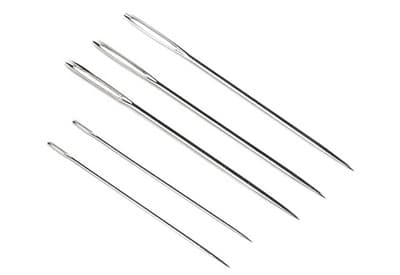
Most stitching trouble, skipped stitches, snapped thread, puckered seams, traces back to two cheap parts that get ignored: the needle and the bobbin. A bent or blunt needle and a badly wound bobbin will ruin good thread and good fabric. Get these two right and the machine runs clean. Here is how to set up needles and bobbins so the seam comes out the first time.
Machine needles and sizes
Machine needles are sized by number, and the rule is simple: light fabric takes a fine needle, heavy fabric takes a thicker one. Around size 9 to 11 suits thin cottons, voiles and silks; 14 is the all-round size for shirting and regular dress fabric; and 16 to 18 handles denim, canvas and layered hems. Use a ballpoint needle for knits and lycra so it slips between the loops instead of cutting them. The needle is the cheapest part of any job, so change it the moment it bends or goes blunt. Keep a few packs of machine and hand needles in mixed sizes in the drawer rather than running on one tired needle.
Hand needles
Hand needles still earn their place for finishing, hemming, attaching hooks and tacking before the machine run. Sharps are the general-purpose hand needle, betweens are short and good for fine, even hand stitches, and a curved needle helps with upholstery and awkward corners. Match the eye to the thread, because forcing thick thread through a small eye frays it and slows you down.
Bobbins and bobbin cases
The bobbin is the lower thread, wound onto a small spool that sits under the needle plate. The single most important rule is to use the correct bobbin for your machine. Metal and plastic bobbins are not interchangeable, and a slightly wrong size will rattle, wind unevenly and throw the tension off. Keep several spare bobbins pre-wound in your common colours so you are not stopping mid-seam to refill. The bobbin case holds that bobbin and sets the lower tension; if the thread is looping underneath or pulling tight, the case tension usually needs a small adjustment rather than a new machine.
Putting it together
Wind the bobbin evenly and not over-full, fit the right needle for your fabric, and use the same thread weight on top and in the bobbin. A common mistake is a heavy top thread fighting a fine bobbin thread, which puckers the seam, so match them and pick a quality stitching thread that runs smoothly. Run a test seam on a fabric scrap before the real piece, because two minutes of testing saves a ripped-out seam later.
For needles, bobbins and bobbin cases that fit the popular machine brands, message us on WhatsApp at +91 98402 69851 and tell us your machine model, so we hand you parts that actually fit. We are in Rattan Bazaar, Sowcarpet, Chennai.